Designing a Custom Liquor Bottles is one of…
Panduan Ukuran Botol Kaca: Perincian Biaya 500ml vs 750ml untuk Pembeli
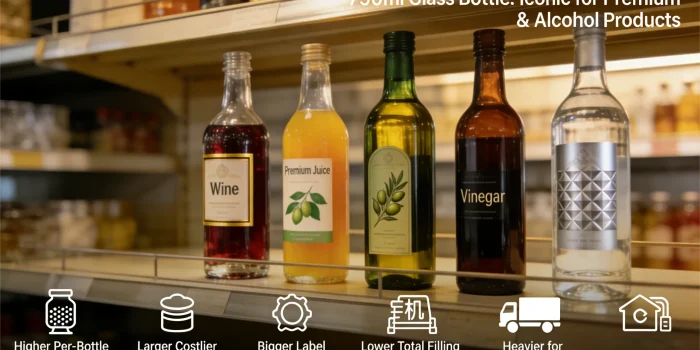
Choosing the right glass bottle size is a big decision for your business. The size you pick affects your costs, shipping, storage, and even how customers see your product. Two of the most popular sizes are the 500ml and the 750ml bottles. This guide breaks down the costs for buyers, focusing on these two common glass bottle size options.
Why Your Glass Bottle Size Choice Matters
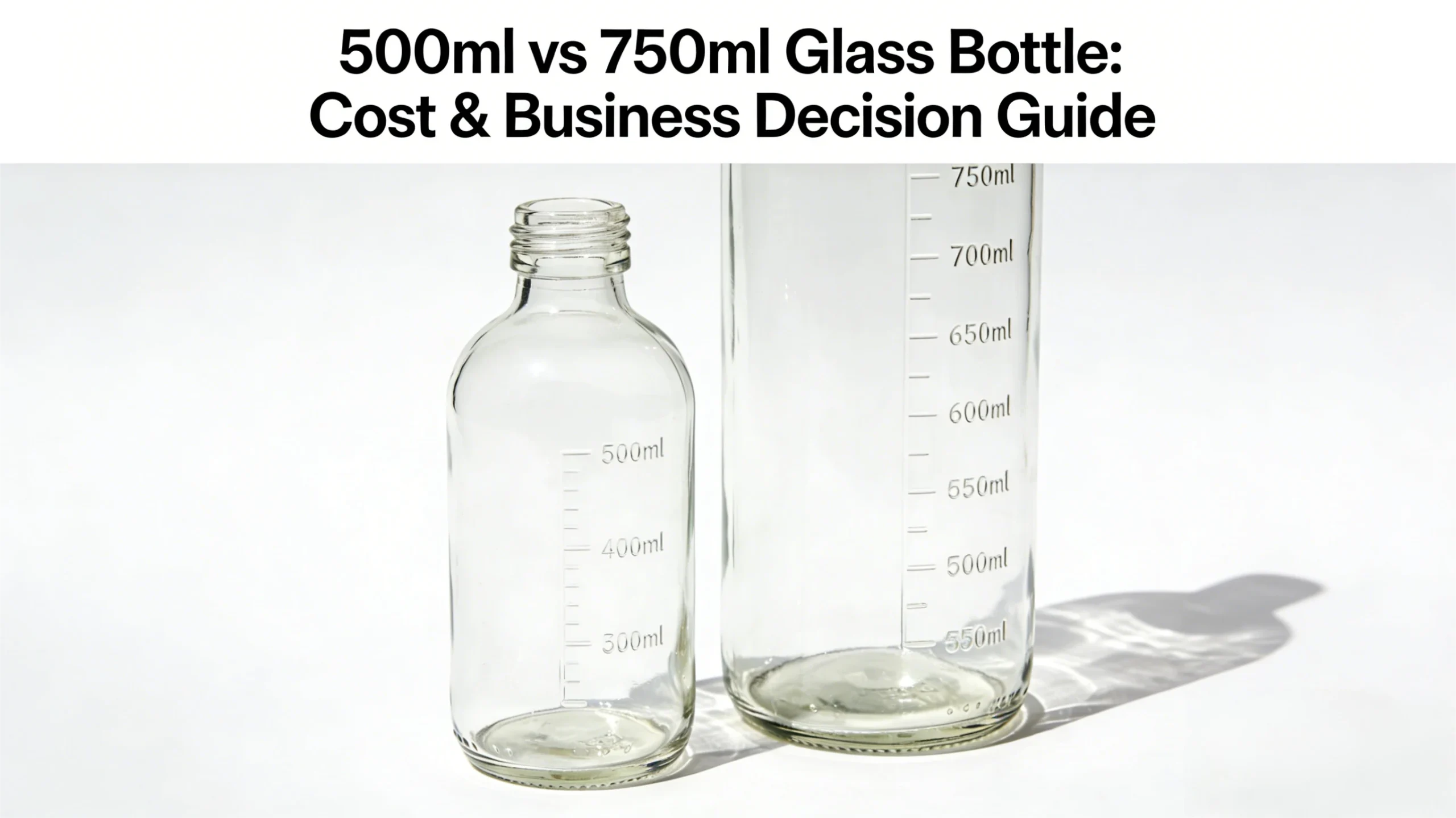
Your glass bottle size impacts almost everything. A smaller bottle might mean lower material costs per bottle, but you might need more bottles for the same amount of product. A larger bottle could save on packaging per ounce, but might cost more upfront. Shipping and storage costs also change with bottle size and weight. Plus, the size sends a message – is your product premium, everyday, or a value buy? Picking the right glass bottle size balances all these factors.
The 500ml Glass Bottle Size: Pros and Costs
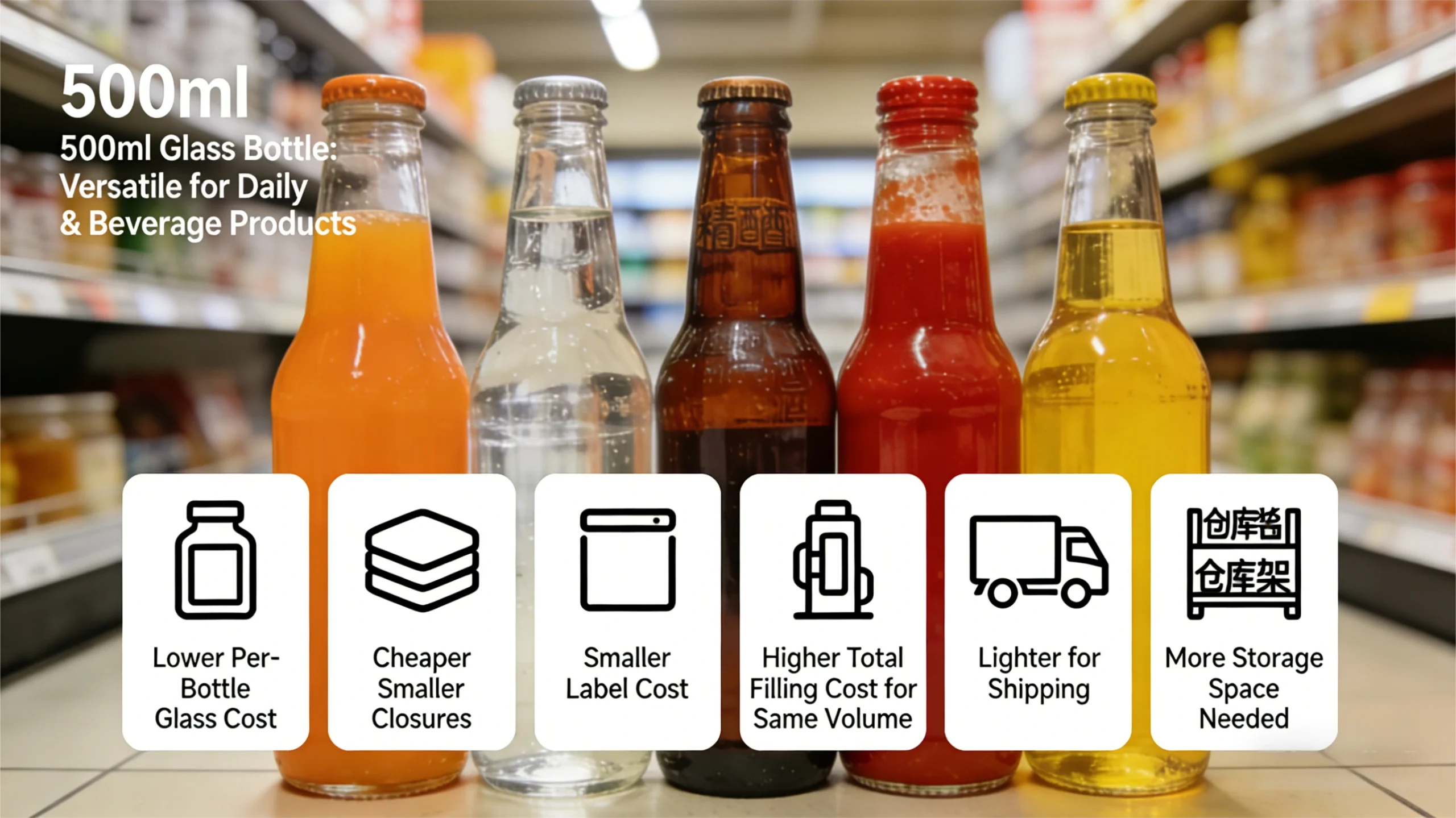
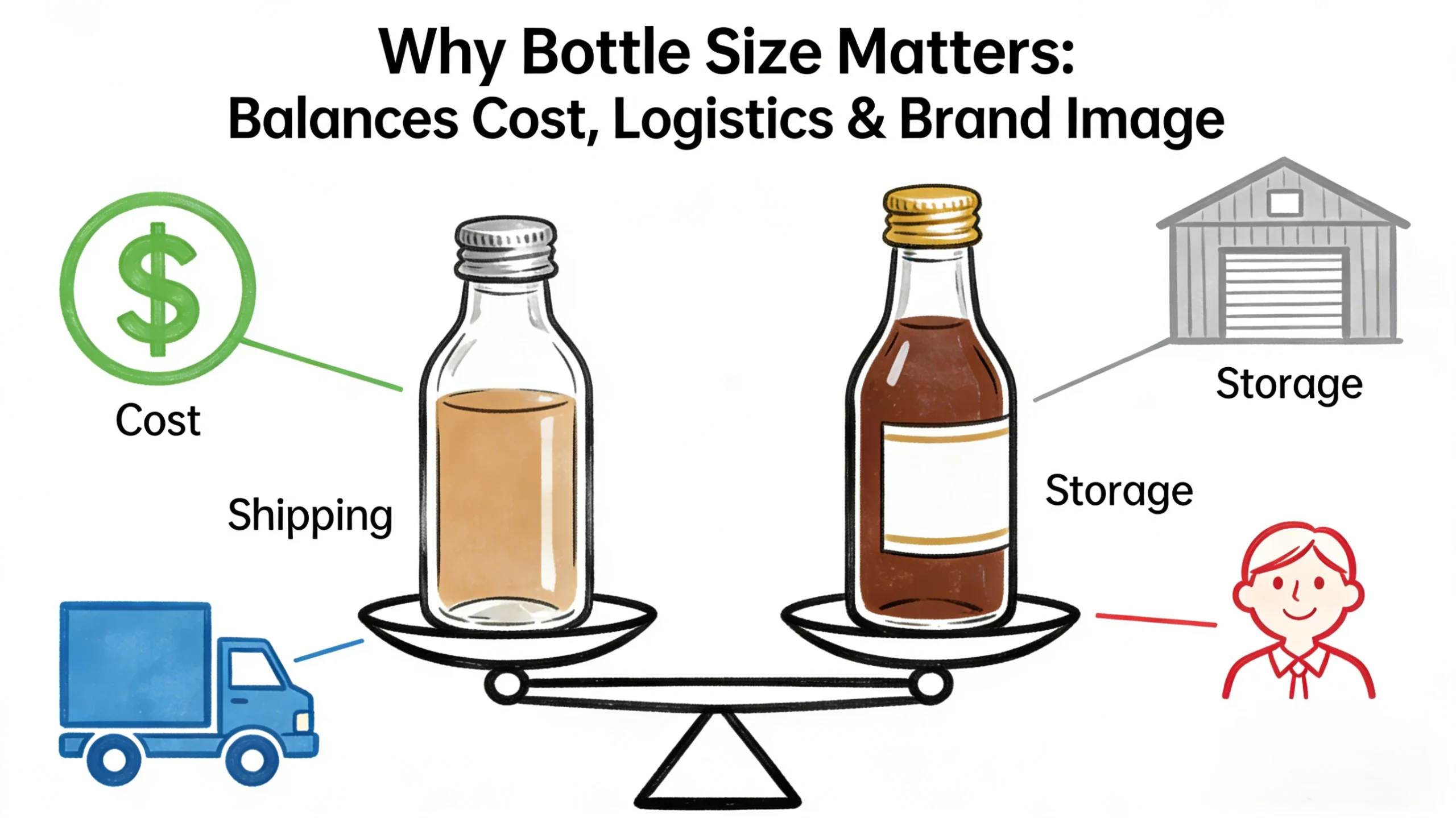
The 500ml bottle is a very common and versatile glass bottle size. It’s popular for juices, sodas, craft beers, sauces, and oils. Here’s what it means for your costs:
- Bottle Cost: Generally, the 500ml bottle will cost less per individual bottle than a 750ml bottle. You need less glass to make it.
- Material Costs (Glass): Less glass used directly means lower material cost per bottle.
- Closures & Caps: Caps and closures (like screw caps or corks) for 500ml bottles are usually slightly smaller and cheaper than those for 750ml bottles.
- Label: Label costs might be slightly lower for the smaller bottle surface area.
- Filling Cost (Per Bottle): Filling one 500ml bottle costs roughly the same in labor and time as filling one 750ml bottle. So, filling more 500ml bottles to hold the same total product volume increases your filling cost.
- Shipping Cost: 500ml bottles are lighter and smaller than 750ml bottles. This means you can fit more bottles into a shipping box or pallet. This often leads to lower shipping costs per bottle. However, because you need more bottles for the same product volume, the total shipping cost for that volume might be similar or slightly higher than for fewer, larger bottles.
- Storage: You need more physical space to store the same volume of product in 500ml bottles compared to 750ml bottles.
Estimated Cost Comparison (Illustrative – Costs Vary Widely):
| Cost Factor | 500ml Bottle (Per Bottle) | 750ml Bottle (Per Bottle) |
|---|---|---|
| Bottle Cost | 0.55−0.85 | 0.75−1.15 |
| Cap/Closure | 0.08−0.15 | 0.10−0.18 |
| Label | 0.05−0.12 | 0.06−0.14 |
| Filling Labor | ~$0.10 | ~$0.10 |
| Total Per Unit | 0.78−1.22 | 1.01−1.57 |
The 750ml Glass Bottle Size: Pros and Costs
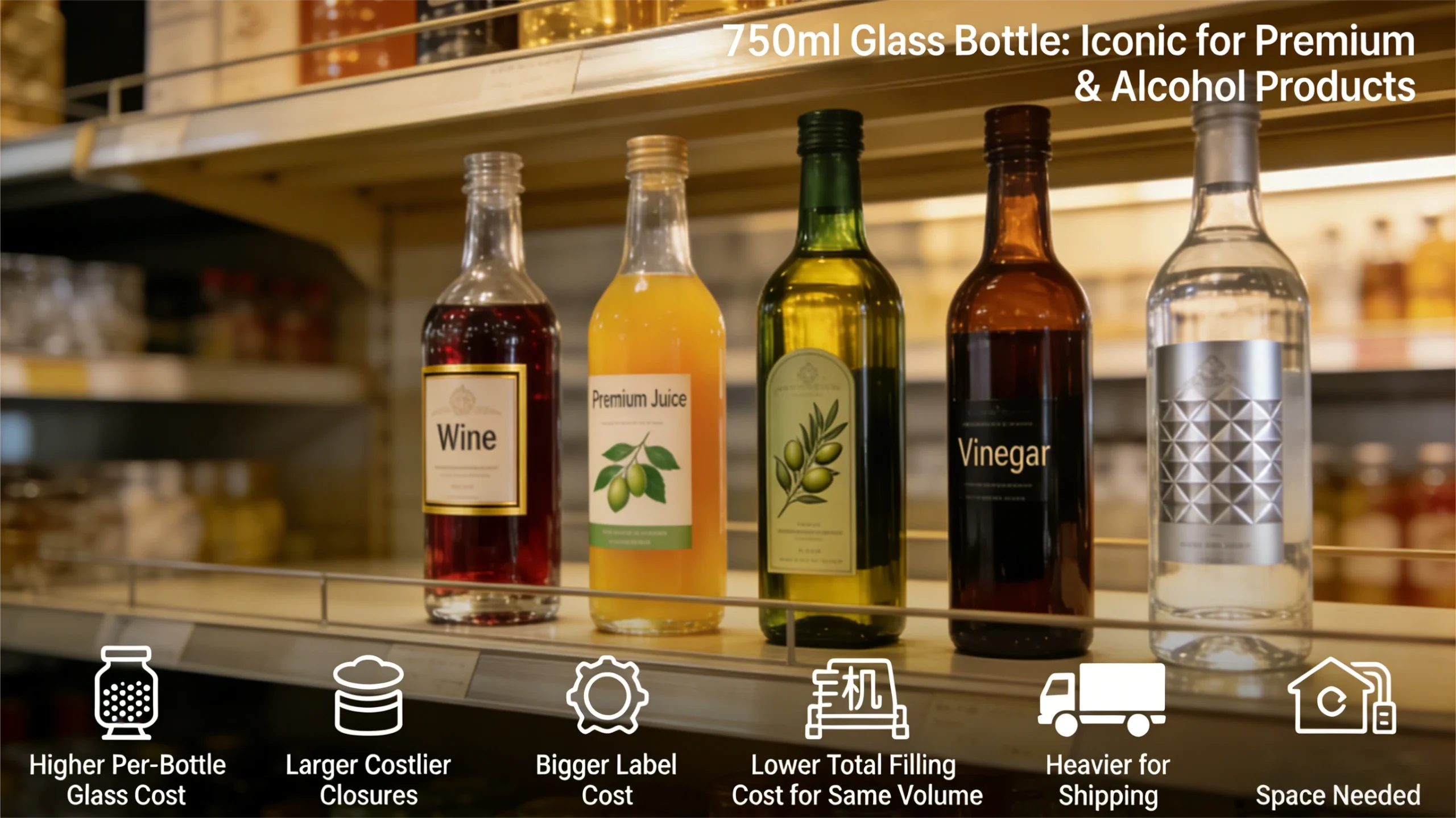
The 750ml bottle is iconic, especially for wine, but also common for premium juices, olive oils, vinegars, and spirits. It offers a different cost structure:
- Bottle Cost: The 750ml bottle costs more per individual bottle than a 500ml bottle because it uses more glass.
- Material Costs (Glass): Significantly more glass is used, increasing the raw material cost per bottle.
- Closures & Caps: Caps and closures are typically larger and slightly more expensive.
- Label: Larger bottle surface area usually means slightly higher label costs.
- Filling Cost (Per Bottle): Filling one 750ml bottle costs about the same as filling one 500ml bottle. Crucially, you need fewer 750ml bottles to hold the same total product volume. This means lower total filling costs for that volume.
- Shipping Cost: 750ml bottles are heavier and larger. You can fit fewer bottles into a shipping box or pallet. This often leads to higher shipping costs per bottle. However, because you need fewer bottles for the same product volume, the total shipping cost for that volume might be similar or slightly lower than shipping more, smaller bottles.
- Storage: You need less physical space to store the same volume of product in 750ml bottles compared to 500ml bottles.
Cost Breakdown: 500ml vs 750ml Per Liter of Product
Looking just at the cost per bottle doesn’t tell the whole story. You need to compare costs per liter (or per unit volume) of your product. This is where the picture changes:
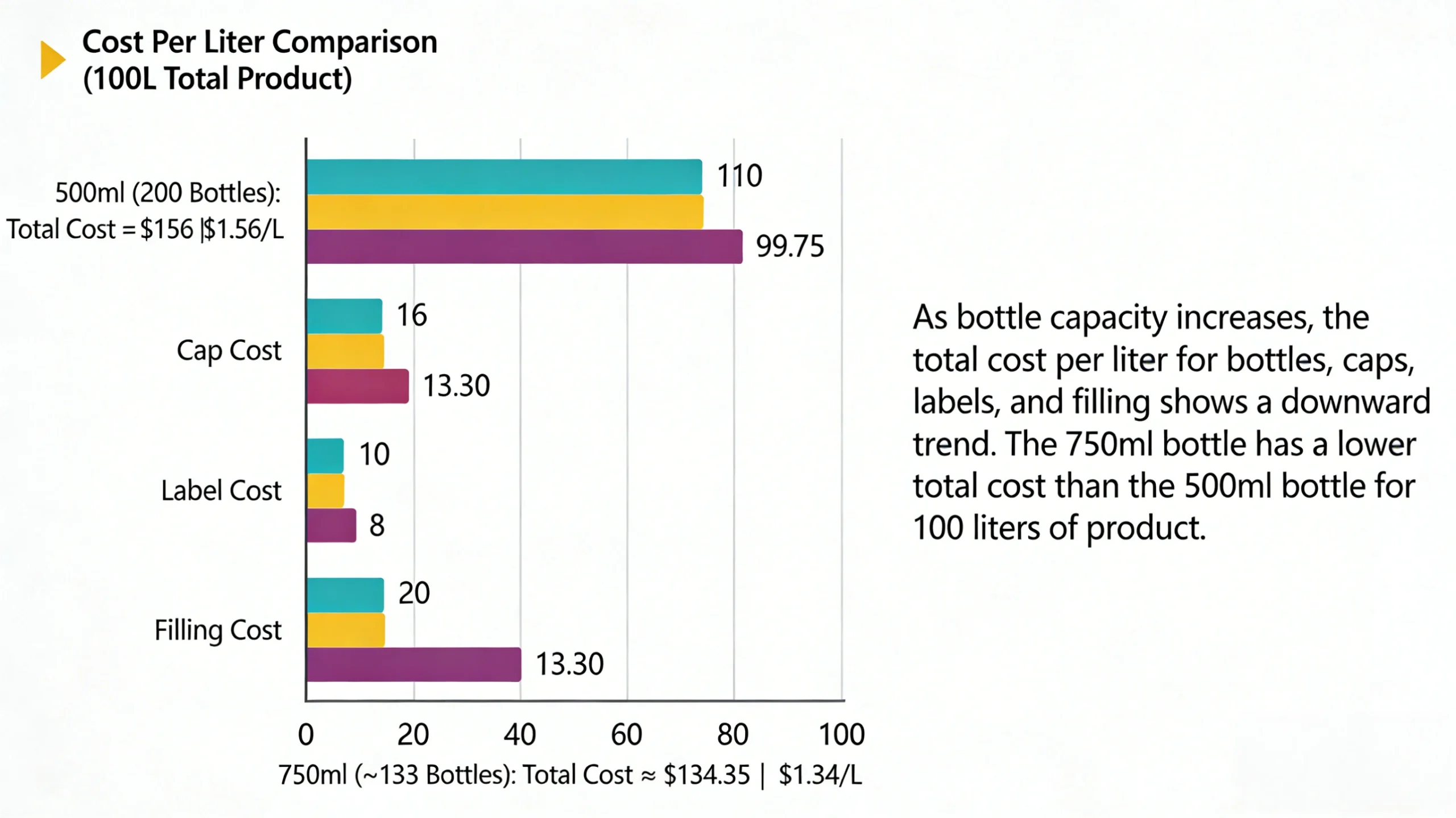
- Total Bottles Needed: To hold 100 liters of product, you need 200 x 500ml bottles (100L / 0.5L = 200 bottles) but only ~133 x 750ml bottles (100L / 0.75L ≈ 133.33 bottles).
- Total Bottle Cost: Using the lower estimates: 200 x 0.55=110 (500ml) vs. 133 x 0.75= 99.75 (750ml). The larger bottle size can offer significant savings on the glass cost per liter.
- Total Cap Cost: 200 x 0.08=16 (500ml) vs. 133 x 0.10=13.30 (750ml).
- Total Label Cost: 200 x 0.05=10 (500ml) vs. 133 x 0.06= 8 (750ml).
- Total Filling Cost: Filling 200 bottles at 0.10 each=20 vs. filling ~133 bottles at 0.10=13.30. Big savings per liter with the larger bottle size.
- Total Unit Cost (Per Liter): 11016 +20 = 156 for 100L via 500ml bottles 1.56/L). vs. 99.7513.30 +13.30 ≈ (1.34/L). (Illustrative, but shows the trend).
- Shipping: While shipping cost per bottle is higher for 750ml, shipping per liter can be comparable or sometimes lower because you ship fewer, heavier boxes/pallets. The total space occupied by ~133 larger bottles vs. 200 smaller ones needs careful pallet configuration analysis.
Beyond Cost: Other Factors for Your Glass Bottle Size
Cost is vital, but don’t forget these:
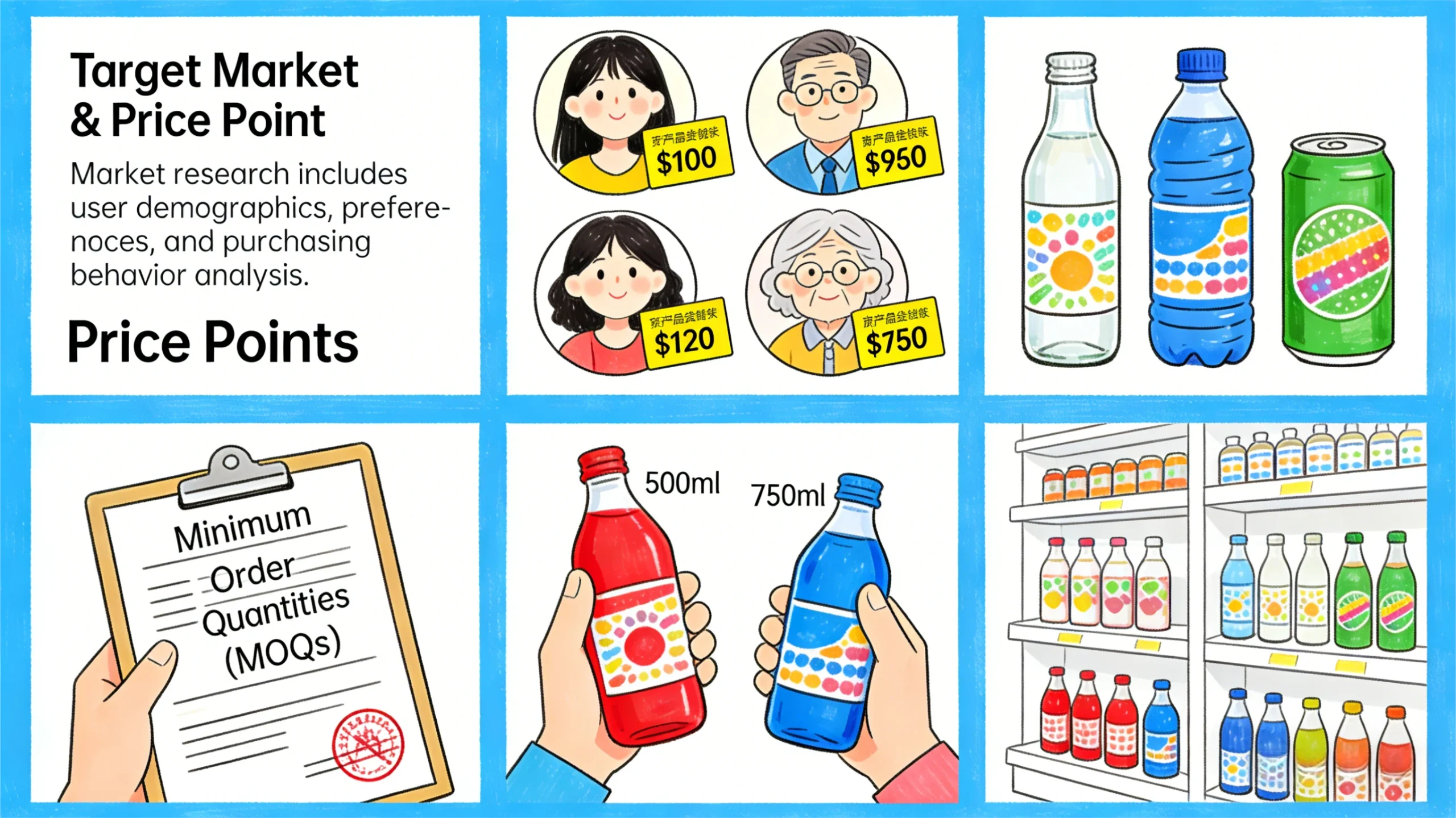
- Target Market & Price Point: Does the 750ml size signal premium quality fitting your brand? Or does the 500ml offer better value perception for your customers?
- Product Type: What size do customers expect? Wine is firmly 750ml, cold brew coffee often 500ml.
- Handling & Usability: Is a 750ml bottle too heavy or bulky for your typical customer? Is 500ml a more convenient single-serving size?
- Minimum Order Quantities (MOQs): Suppliers might have different MOQs for different bottle sizes. Factor this in.
- Shelf Space: How will retailers display your chosen glass bottle size?
Conclusion: Finding the Best Glass Bottle Size Fit
There’s no single “best” glass bottle size. The 500ml bottle often wins on lower cost per individual bottle and can be great for value-focused products, single servings, or where lighter weight is key. The 750ml bottle frequently offers lower costs per liter of your actual product due to needing fewer bottles, caps, labels, and less filling labor. It often carries a premium image.
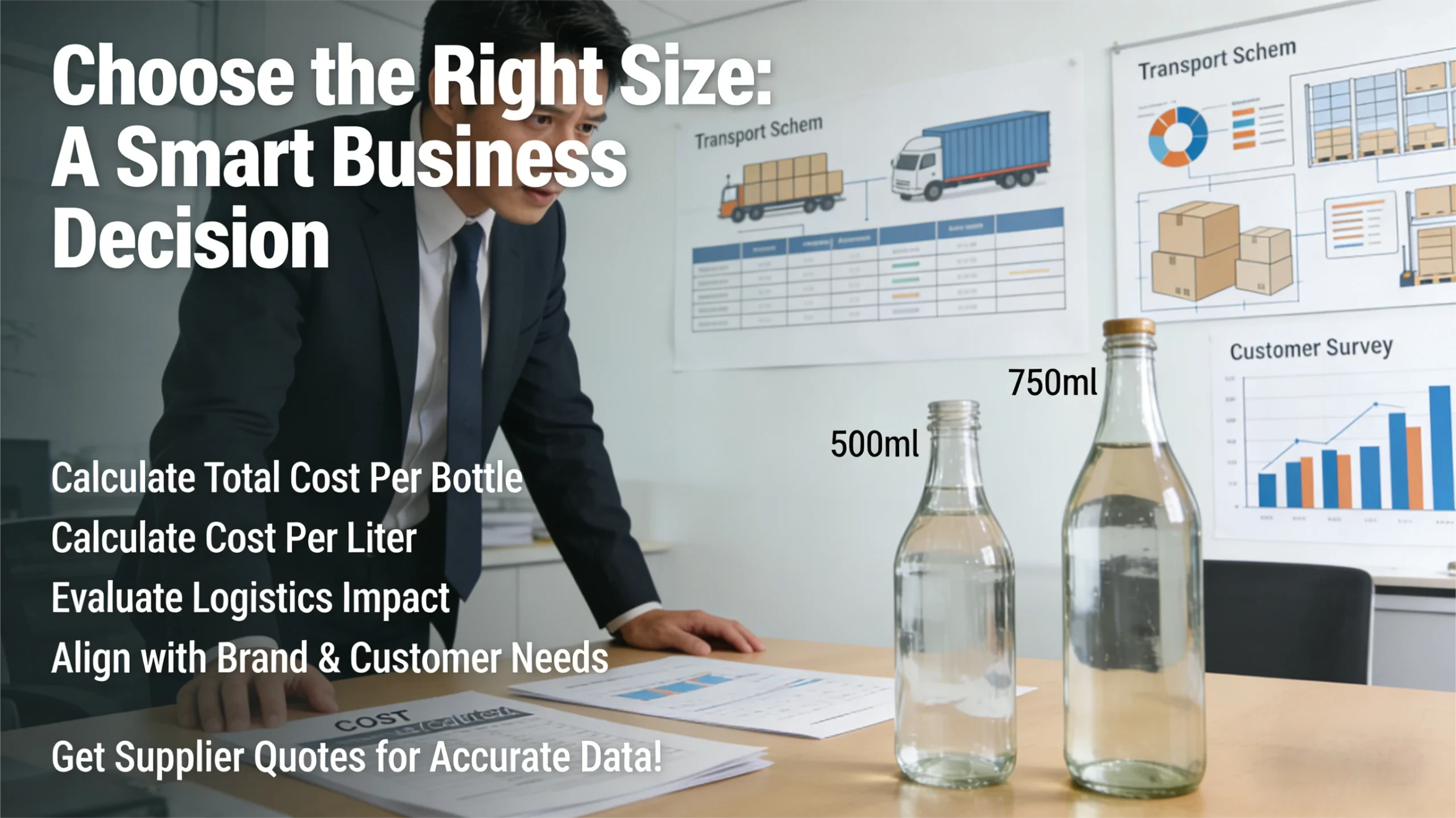
As a buyer, carefully calculate:
- The total cost per bottle for each component (bottle, cap, label, filling).
- The total cost per liter (or gallon) of your product for each bottle size option.
- The impact on shipping and storage for your specific logistics.
- The non-cost factors like brand image and customer expectations.
By comparing the 500ml and 750ml glass bottle size options across all these areas, you can make a smart, cost-effective decision for your business. Always get specific quotes from your suppliers to run your own detailed numbers!
Postingan Terkait