Custom 700ml Liquor Bottles - Screen Printing, Frosting…
Custom 700ml Vodka Bottles with Embossed Logo – OEM Supplier Guide
Custom 700ml Vodka Bottles with Embossed Logo – OEM Supplier Guide
A vodka bottle is more than a container. It is one of the first things customers see when they encounter a spirit brand, and its shape, glass clarity, weight and branding details can all influence the overall impression of the product. For this reason, many vodka brands choose custom 700ml vodka bottles when developing a new product or refreshing an existing package. Well-designed custom 700ml vodka bottles can help create a distinctive shelf presence while also giving the brand more control over its packaging identity.
The 700ml format is practical for many international spirits markets and gives brands enough space to create a strong visual identity without making the package unnecessarily large. It works well with different bottle shapes, closures, labels and secondary packaging formats, making it a flexible option for vodka and other spirits. For brands looking for a premium appearance, an embossed logo can add another layer of identity without relying entirely on printed decoration. When the bottle shape and logo are developed together, the packaging can feel much more consistent and intentional.
Why Choose custom 700ml vodka bottles?
700ml is a familiar spirits bottle capacity in many markets, which makes it a practical starting point for vodka brands entering different regions. The size provides enough surface area for an attractive label, embossed logo or other decoration while keeping the overall bottle relatively compact. It can also work well with common closure and carton formats, which may simplify packaging development. For brands with several spirits products, a 700ml format can also create consistency across a wider product range.
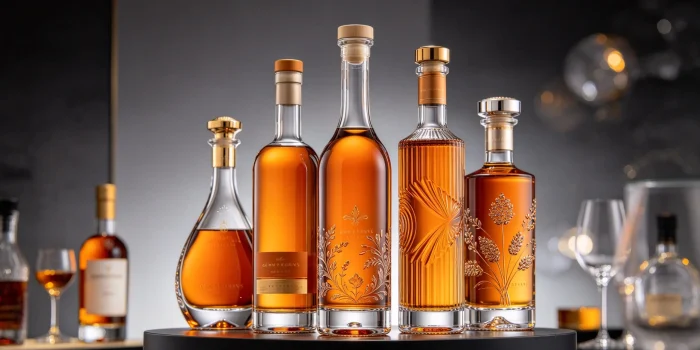
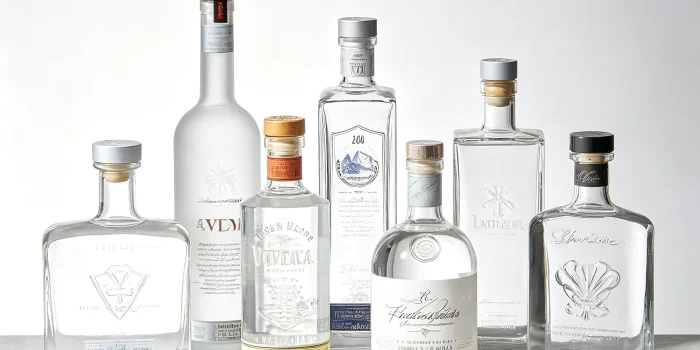
The main advantage of a custom bottle is design flexibility. Custom 700ml vodka bottles can be developed in a square, rectangular, round, oval or more distinctive shape, depending on the brand concept. The shoulder, neck, base and label area can all be adjusted to create a particular visual character. These details become especially important when the bottle itself is expected to carry a large part of the brand identity.
For brands that do not need a completely original shape, an existing bottle model can be a practical alternative. HIKING GLASS offers a range of 700ml spirit bottle designs that can be considered for vodka, gin, rum and other spirits. Using an existing mold can reduce development time compared with starting from a completely new bottle design. You can explore the available models through the 700ml Glass Bottles and Custom Square Spirit Bottles collection.
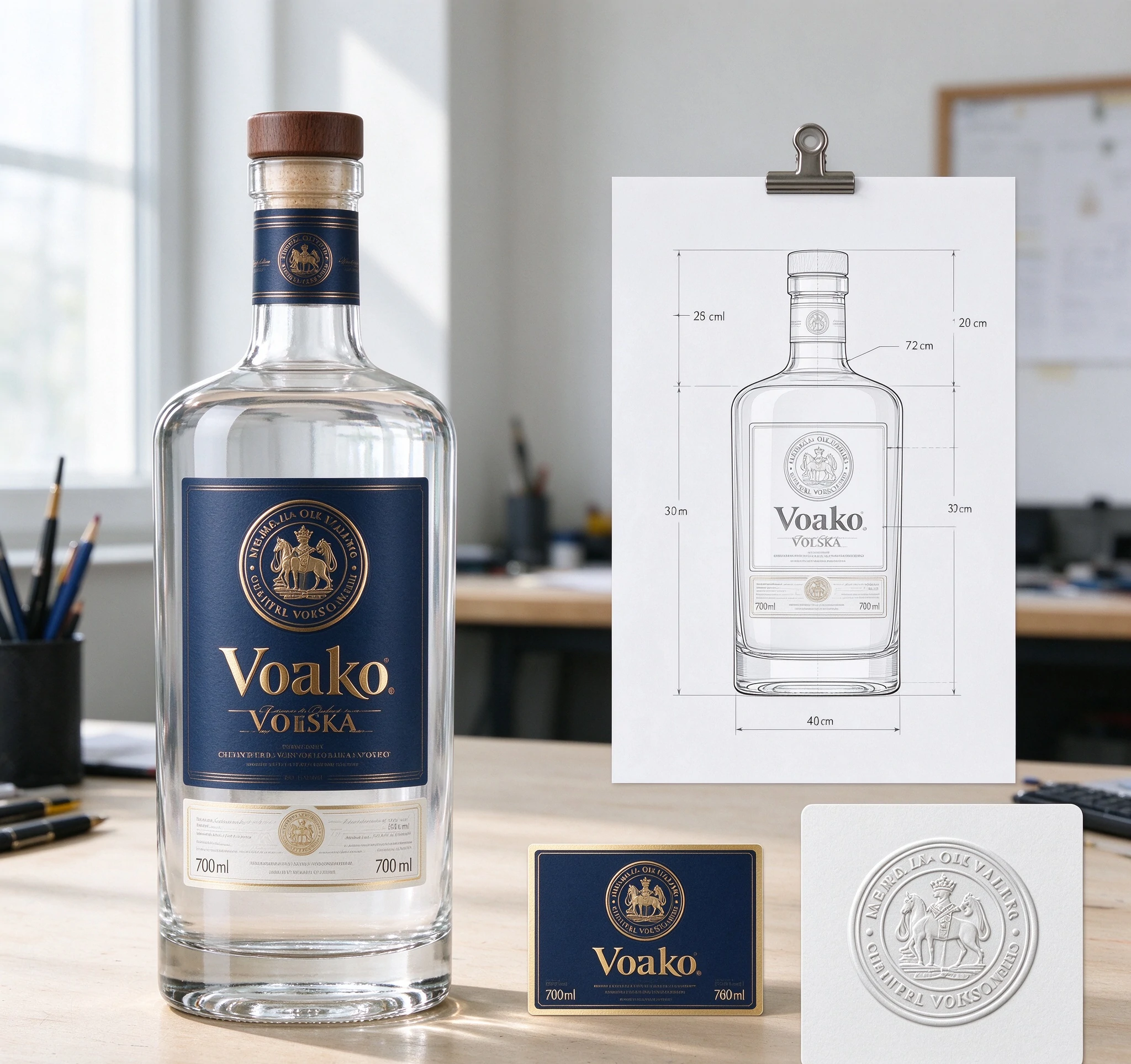
What Makes an Embossed Logo Different?
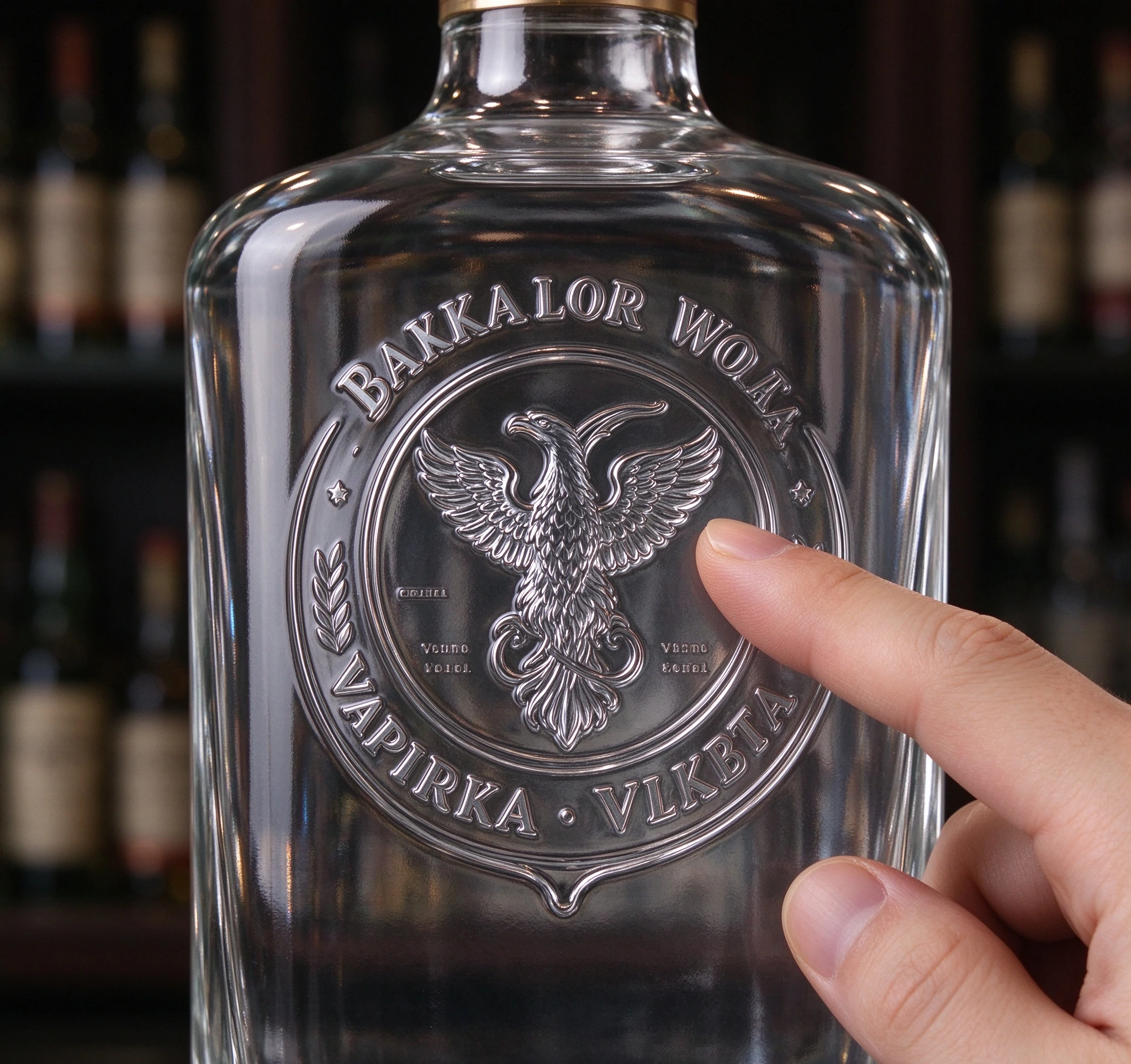
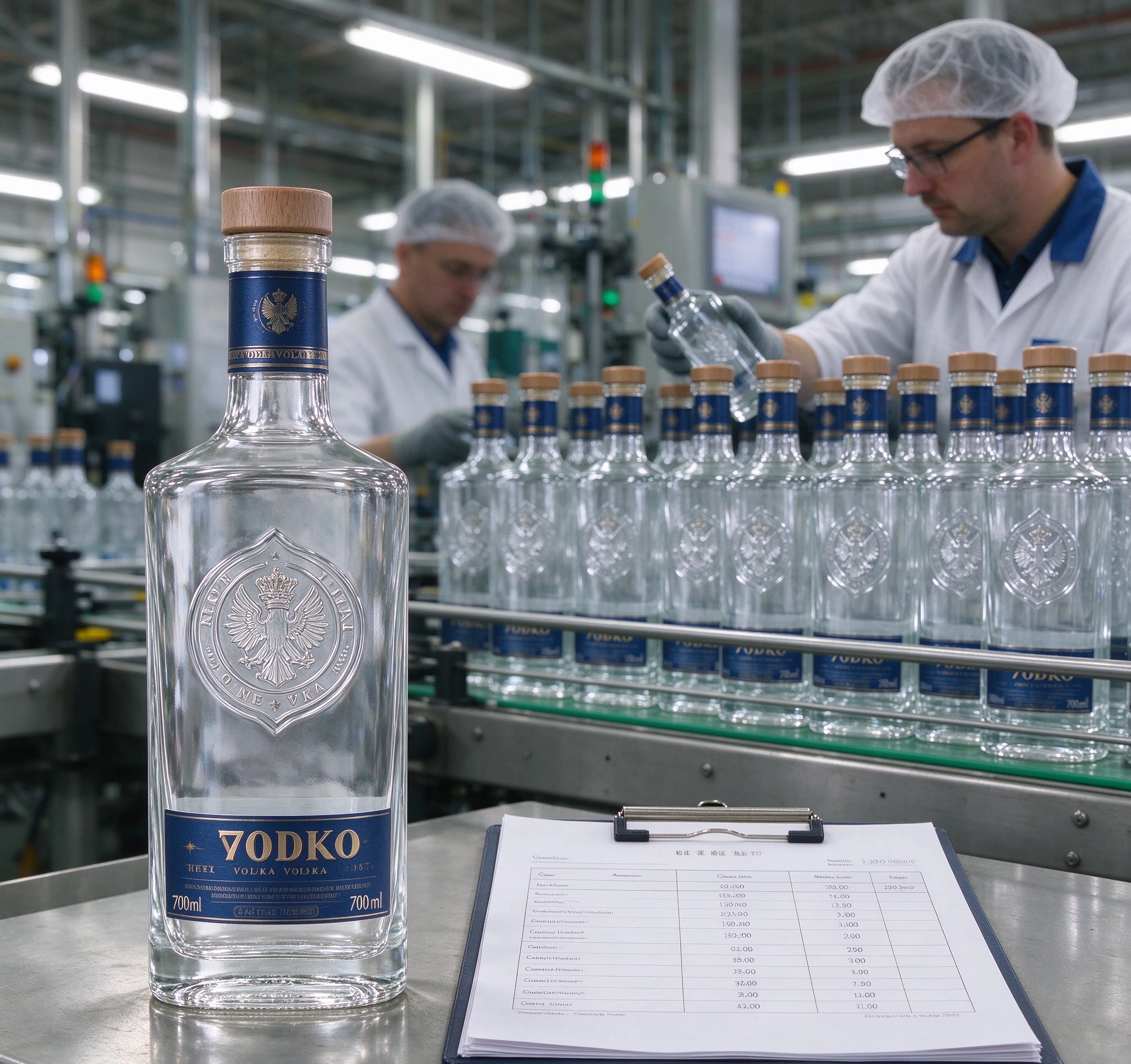
An embossed logo is formed directly into the glass instead of being applied to the bottle after production. The brand mark becomes part of the bottle surface, which creates a tactile effect that customers can see and feel when they hold the product. This approach is particularly suitable for brands that want a clean and premium appearance without covering too much of the glass with printed graphics. It can also give a standard bottle shape a more distinctive brand identity.
Embossing can be used for a company name, logo, monogram or simple graphic element. Depending on the bottle design, the logo can be positioned on the front panel, shoulder, base or another suitable area. The final position should be considered together with the label area and bottle structure so that the different elements do not compete with each other. A simple and well-proportioned embossed logo can often have more visual impact than an overly complicated design.
There are also technical limitations that need to be considered when developing embossed glass. Glass is formed at high temperatures, so extremely thin lines and very sharp internal corners may not reproduce exactly as they appear in digital artwork. A professional glass bottle manufacturer should review the artwork before the mold is produced and may recommend adjustments to line thickness, spacing or relief depth. These small changes can help ensure that the final bottle reproduces the brand mark clearly and consistently.
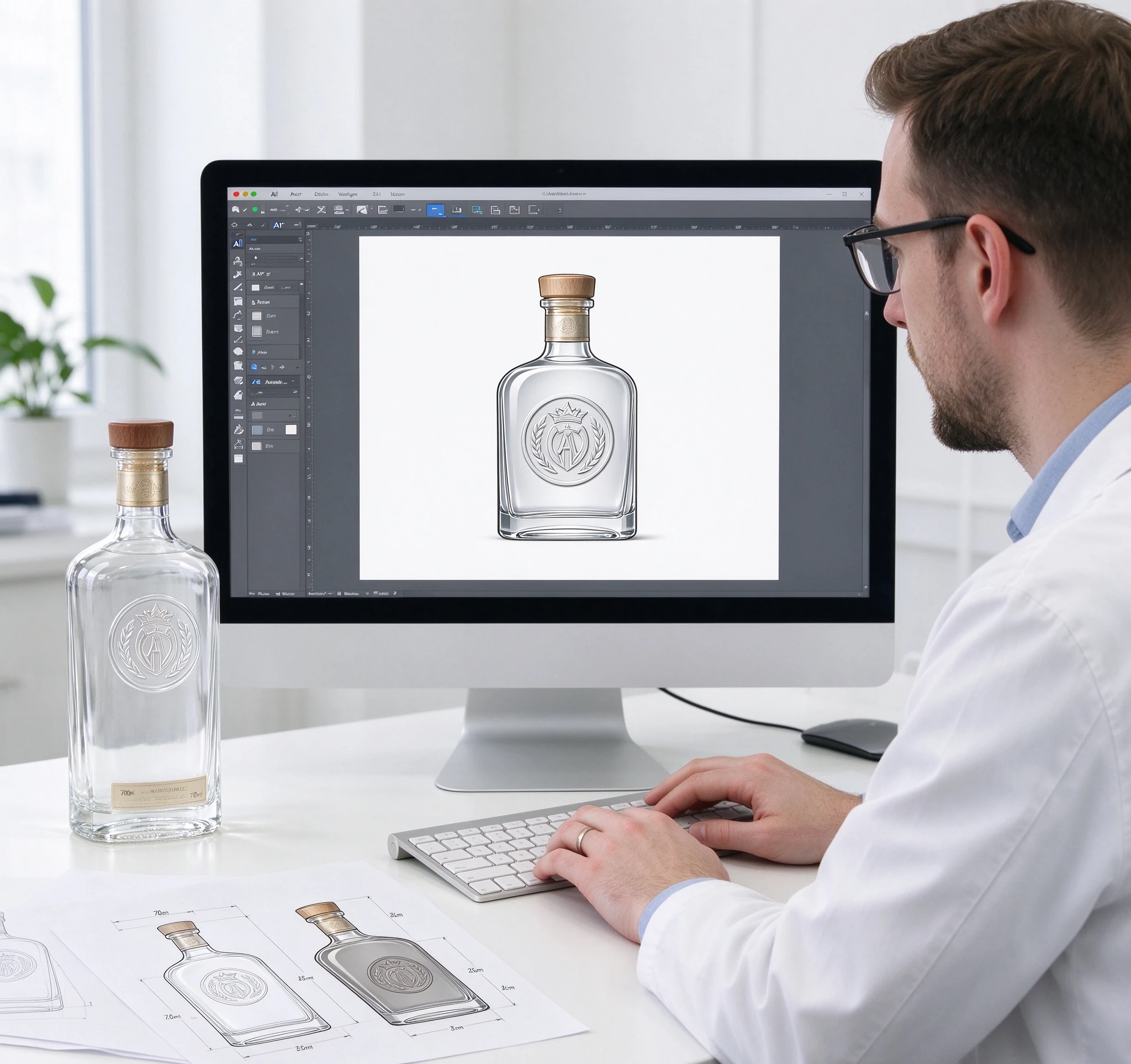
How to Prepare Artwork for Custom 700ml Vodka Bottles
The best starting point for an embossed logo is usually a vector file such as AI, EPS or an editable PDF. Vector artwork allows the mold engineer to examine the logo accurately and scale it to the required size. Low-resolution JPG or PNG files may be useful as references, but they are less suitable for actual mold development. Providing clean artwork at the beginning can make communication between the brand owner, designer and factory much easier.
Simple logos are generally easier to reproduce than highly detailed illustrations. Fine lines need enough thickness to remain visible after the glass is molded, while very small gaps between letters or graphic elements may need to be increased. The logo should therefore be reviewed at its actual size rather than only on a large computer screen. A design that looks clear on a monitor may require minor technical adjustments before it can be transferred successfully to glass.
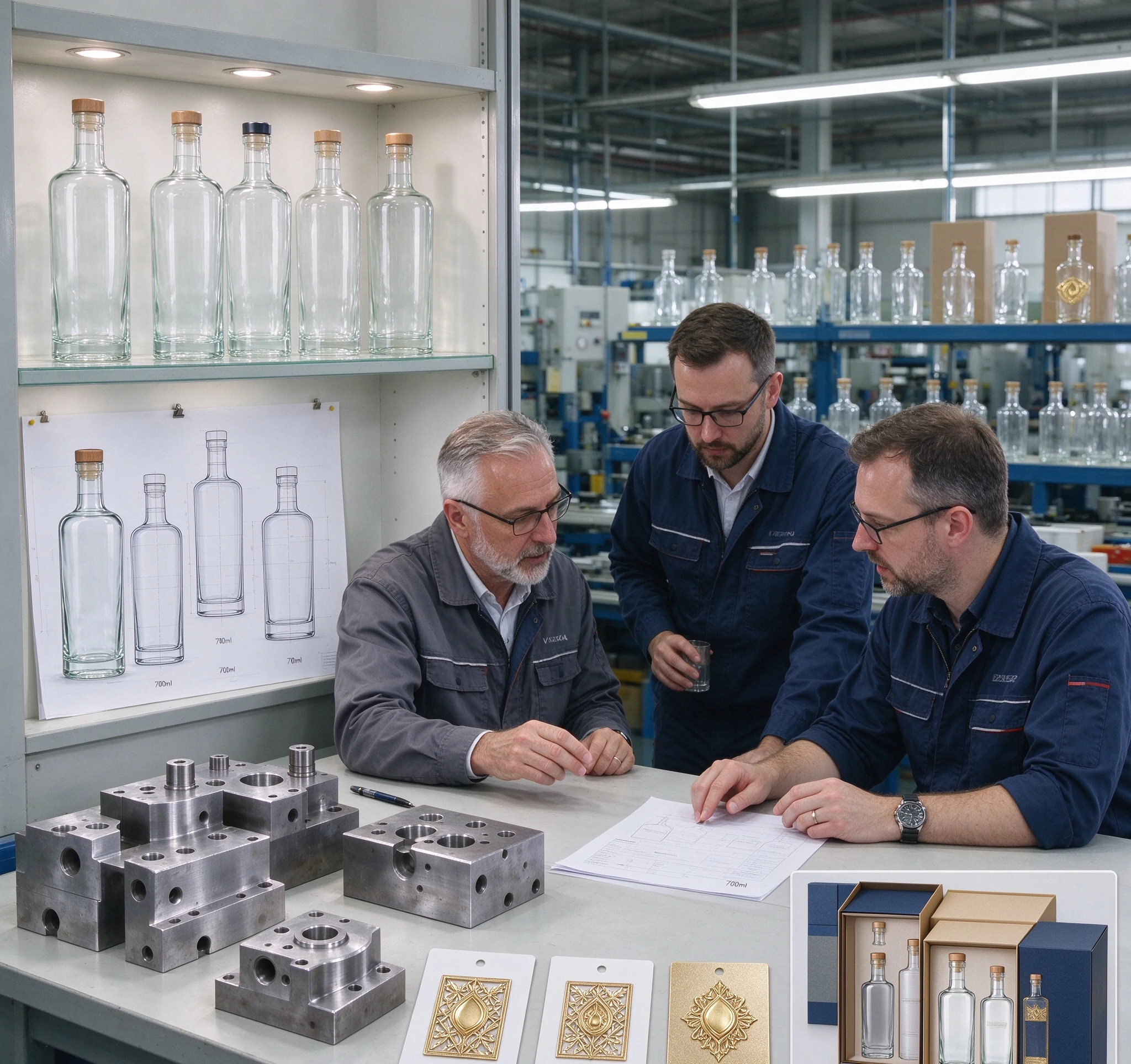
For complex branding, a prototype can be useful before the final glass mold is completed. A prototype gives the brand team an opportunity to check the proportions, logo placement and overall appearance in a physical form. It can also reveal design issues that are difficult to identify from a two-dimensional drawing. Making adjustments during development is normally easier and less costly than changing the design after mass production has started.
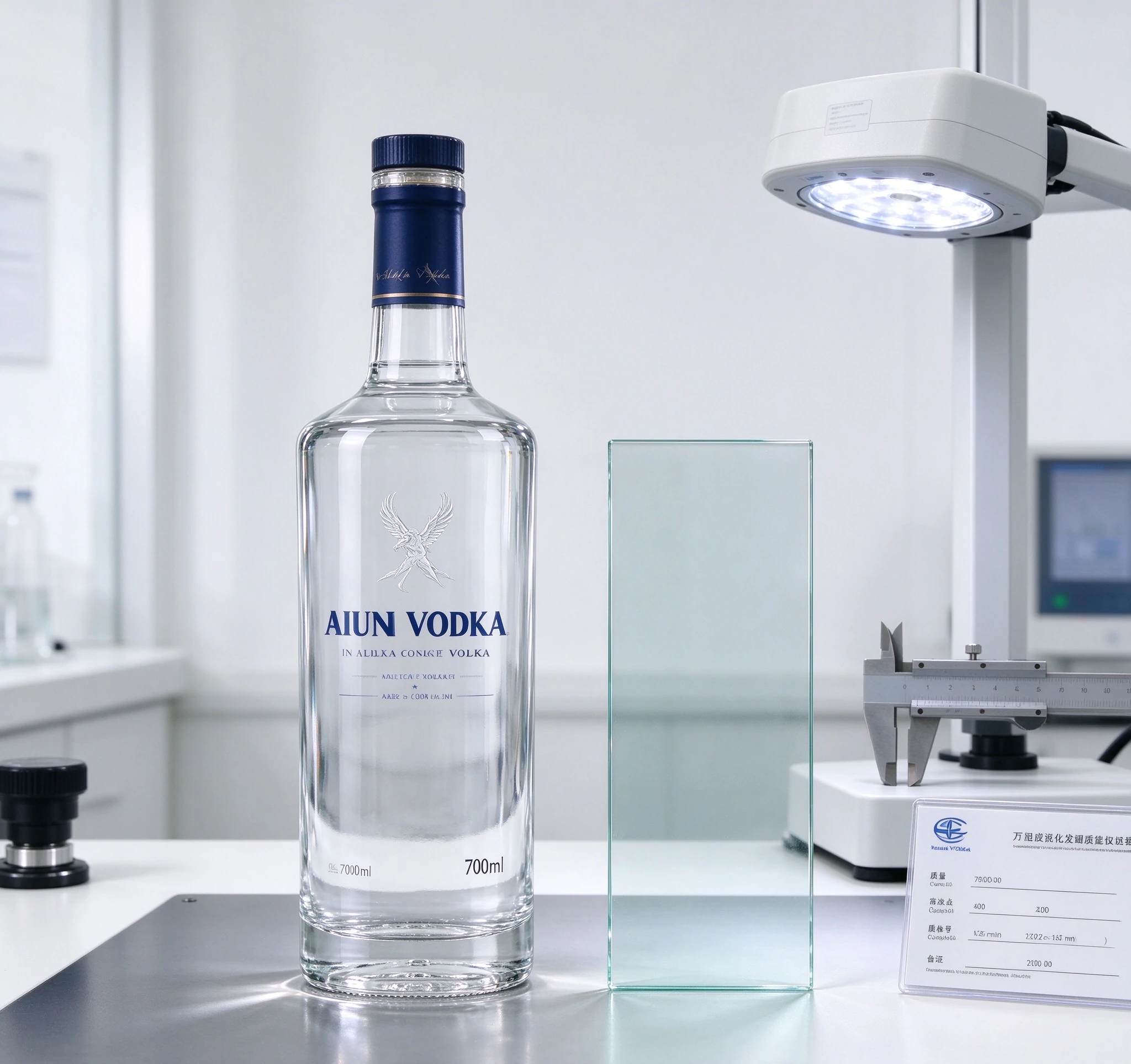
Choosing Glass Quality and Bottle Weight
Glass quality has a direct effect on how a vodka bottle looks and feels. High-flint glass can provide a bright and clear appearance, which is often suitable for premium vodka brands that want the liquid and bottle details to remain highly visible. The choice of glass should also take into account the target market, bottle design and overall packaging budget. A supplier can help recommend an appropriate glass specification based on the project requirements.
Bottle weight is another important consideration. A heavier bottle can create a solid and premium feeling when customers pick it up, but additional glass also increases transportation weight and may affect logistics costs. The goal is therefore not simply to make the bottle as heavy as possible. A better approach is to find a suitable balance between appearance, strength, production requirements and shipping efficiency.
For buyers comparing different bottle styles, looking at existing models can help establish a practical starting point. HIKING GLASS provides different spirit bottle capacities and shapes, including 700ml and 750ml options. Some models can also be combined with embossing and other decoration techniques depending on the design. Reviewing existing products before creating a new mold can help buyers decide whether a standard model already meets most of their requirements.
Existing Mold or New Mold?
One of the first decisions in a custom bottle project is whether to use an existing mold or develop a new one. If an existing 700ml bottle already has the desired shape, capacity and neck finish, it may be possible to use that model and focus on branding and decoration. This can shorten the development process and reduce the initial mold investment. It is often a useful option for brands that want a distinctive package but do not require a completely unique bottle silhouette.
A new mold becomes more useful when the bottle itself is an important part of the brand concept. The shape can then be designed around the logo, label area, shoulder profile, base and closure. This gives the brand more freedom to create a unique package that cannot easily be confused with another product. The trade-off is that new mold development requires additional time, engineering work and upfront investment.
HIKING GLASS supports both standard bottle selection and custom bottle development. Customers can provide a reference bottle, picture, drawing or other design information as a starting point for evaluation. The supplier can then determine whether an existing bottle is suitable or whether a new mold would be more appropriate. More information about the company and its OEM glass bottle capabilities can be found on the HIKING GLASS Custom Glass Bottle Manufacturer and OEM Supplier page.
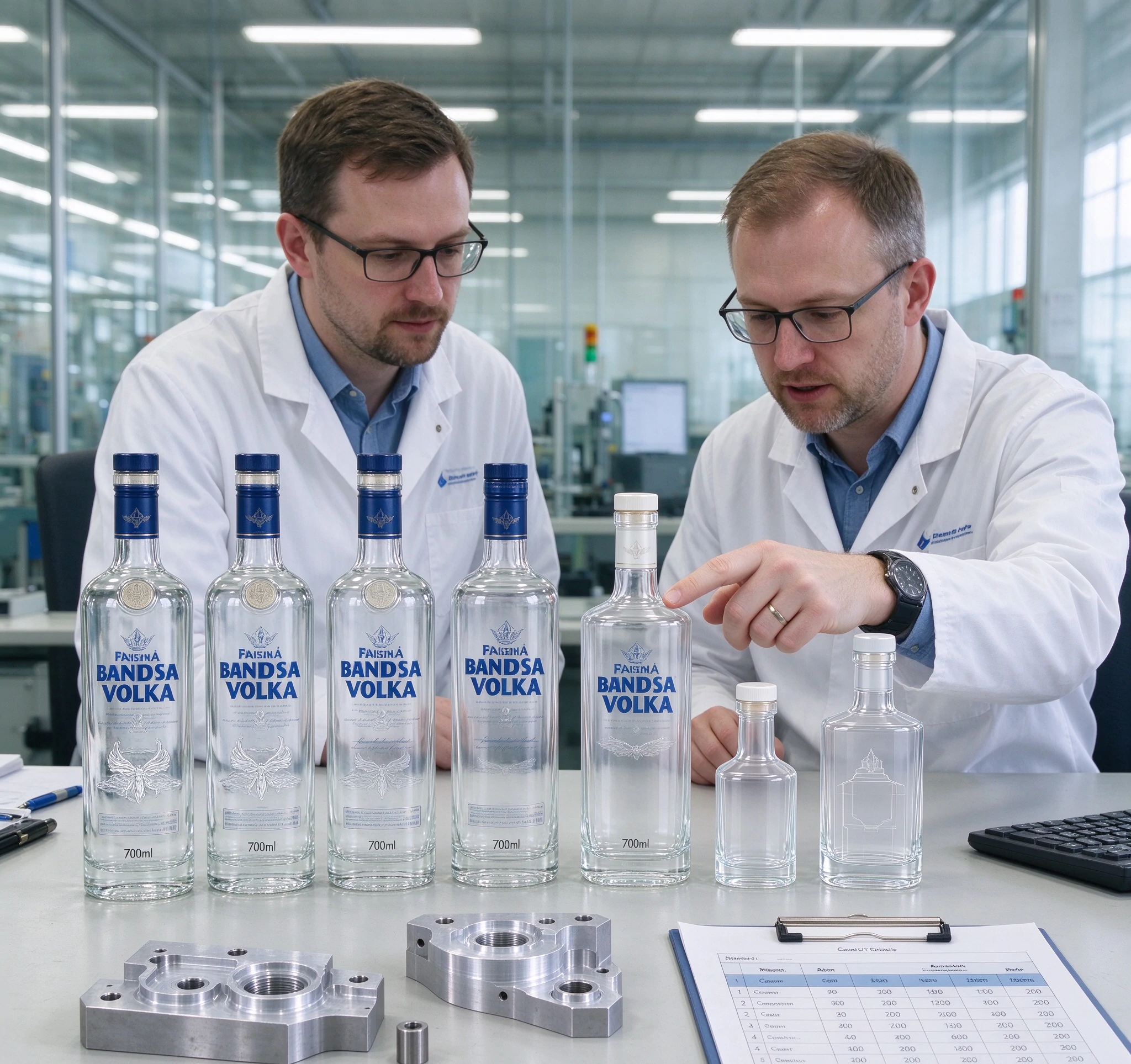
Decoration Options Beyond Embossing
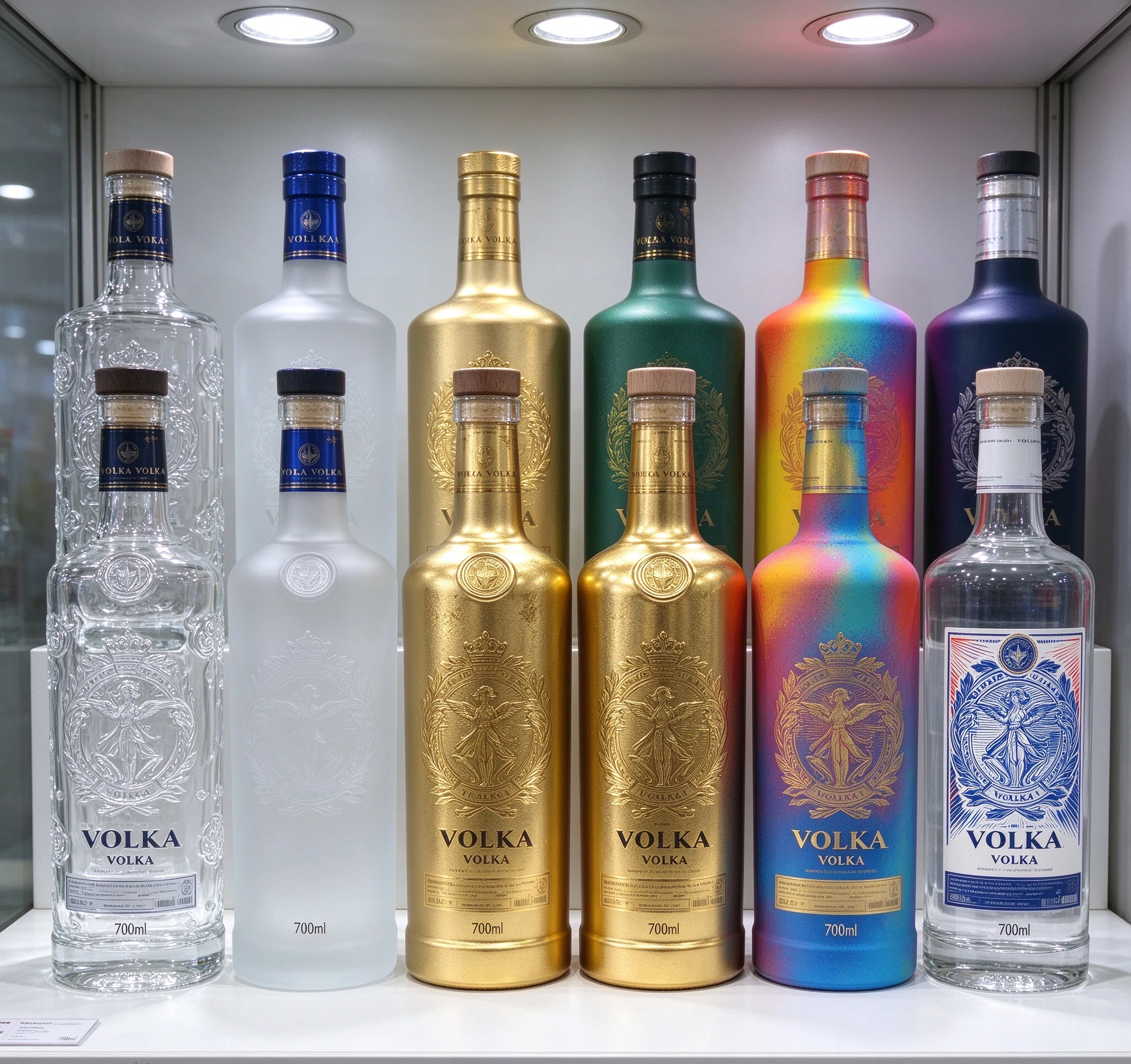
Embossing does not have to be the only decoration used on custom 700ml vodka bottles. Depending on the design, brands can combine embossed glass with silk printing, decals, frosting, spray coating, hot stamping or other surface treatments. These techniques can add color, texture or additional branding information without changing the basic bottle shape. The right combination depends on the brand style and the desired retail appearance.
Frosting can create a soft and contemporary surface, while spray coating can add a solid color or matte finish. Printing is useful when the brand needs detailed text, graphics or regulatory information that cannot be included in the embossed design. Hot stamping can provide another premium detail when metallic effects are required. Each process has different technical requirements, so the supplier should review the complete design before production.
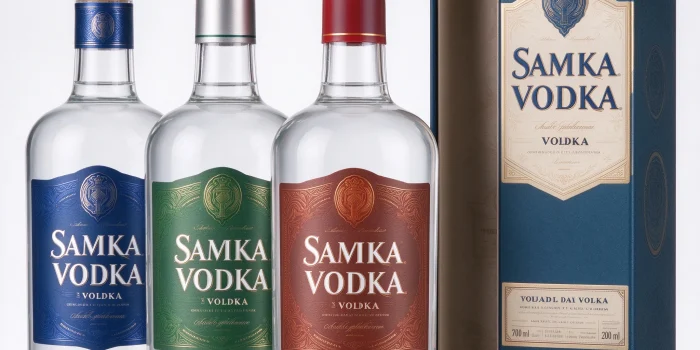
For example, Custom 700ml Vodka Bottles could have a subtle embossed logo on the front panel combined with a small printed product name. Another brand may prefer a fully frosted bottle with a polished embossed logo that creates contrast against the surface. These approaches can produce very different results even when the underlying bottle capacity is the same. The important point is to make the bottle, logo, label and closure work together as one packaging system.
For another reference, you can review the 700ml Square Glass Bottle with Embossed Logo for Spirits. This type of bottle demonstrates how a brand mark can be incorporated directly into the glass surface while maintaining a clean overall appearance. Similar design principles can be considered when developing custom 700ml vodka bottles.
Closures and One-Stop Vodka Packaging
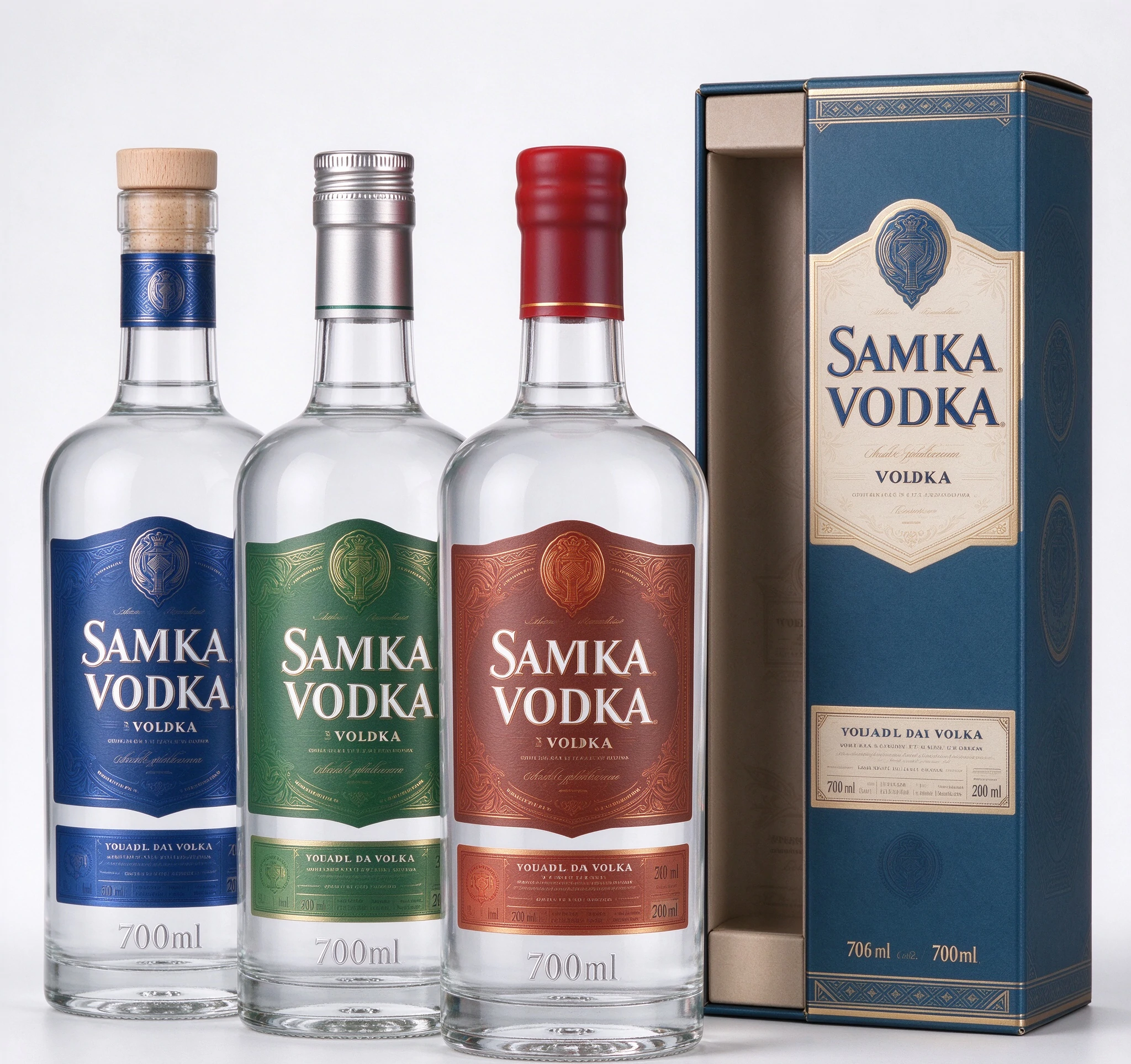
The bottle should not be considered separately from the closure because the two components form one visual package. A cork, screw cap or other closure can significantly change the overall appearance of the finished product, so the neck finish should be confirmed before production begins. The closure also needs to match the bottle dimensions and sealing requirements. Discussing these details early can prevent compatibility problems later in the project.
Premium vodka brands often want the closure to carry some of the same visual language as the bottle. A natural wood cork can create a traditional appearance, while a custom-colored capsule can reinforce the brand’s main color. Labels and retail boxes can then complete the packaging system and create a consistent presentation. When several packaging components are developed together, it is easier to keep their dimensions, colors and finishes coordinated.
A one-stop packaging service can also simplify communication for international buyers. Depending on the project, a glass bottle supplier may be able to provide bottles together with corks, capsules, labels and boxes. This reduces the need to coordinate several different suppliers for one product launch. For brands developing custom 700ml vodka bottles, discussing the complete packaging system with the supplier can therefore be useful from the beginning.
What to Confirm Before Placing custom 700ml vodka bottles Order
Before requesting a final quotation, it is helpful to prepare as much technical information as possible. Start with the required capacity, approximate dimensions, bottle shape and target quantity, then add your logo artwork and any reference pictures or drawings. You should also specify the preferred glass color, neck finish, closure and decoration method if these details have already been decided. The more complete the initial information is, the easier it is for the supplier to prepare a meaningful quotation.
Sample arrangements should also be discussed before production begins. A physical sample is particularly useful when the design includes embossing because it allows the brand team to check the logo size, position, surface quality and overall proportions. If a new mold is required, sample approval should normally take place before mass production. This gives both sides an opportunity to make final adjustments before a large production quantity is manufactured.
Export packaging is another important part of the project. Cartons, pallets, internal separators and loading arrangements all affect the final logistics plan, especially for international shipments.
How the Custom 700ml Vodka Bottles Process Works
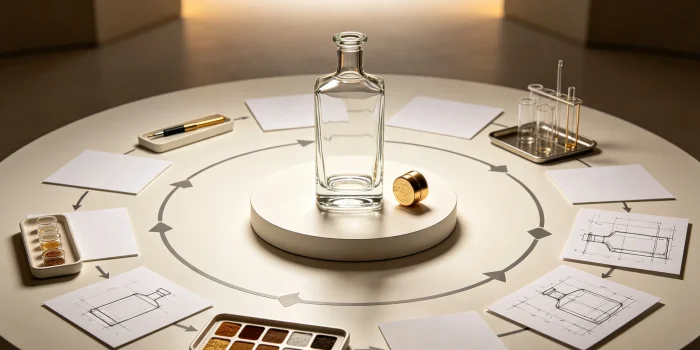
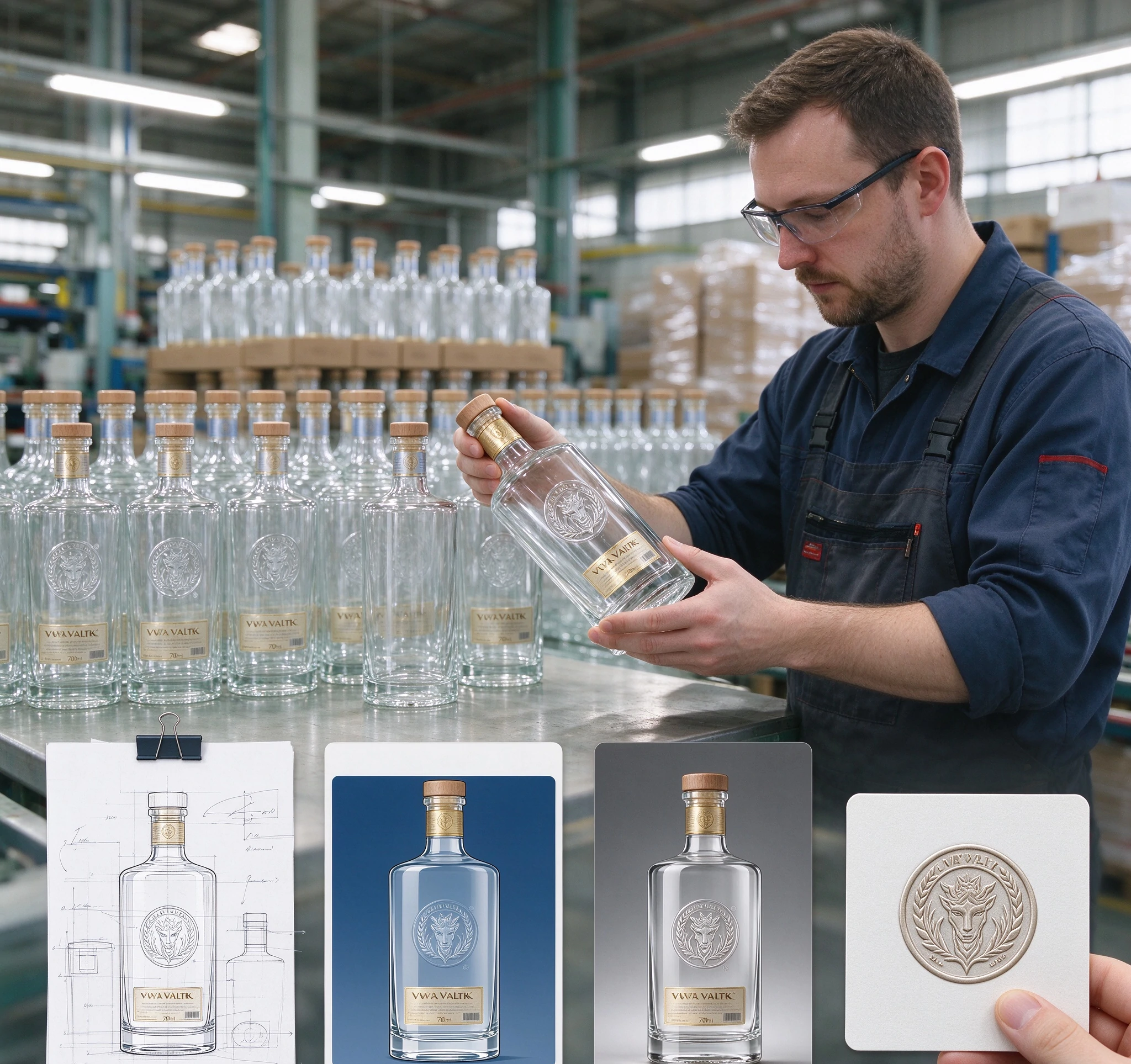
The Custom 700ml Vodka Bottles development process usually begins with an idea, reference bottle, picture or technical drawing. The supplier reviews the design and determines whether an existing mold can meet the requirements. If an existing model is suitable, development may focus on logo placement and decoration, while a completely new design will require custom mold development. At this stage, the bottle structure and branding details should be discussed together.
Once the design is confirmed, the mold can be developed and samples produced for approval. The sample gives the buyer an opportunity to check the bottle in physical form before full production begins. If the embossed logo or bottle shape needs adjustment, changes can be made during this stage. After the sample is approved, the supplier can move forward with the production schedule and packaging arrangements.
Lead time depends on several factors, including whether an existing mold is used, the complexity of the bottle design, the required quantity and the decoration process. Existing standard bottles can generally move faster because the mold is already available, while new bottle development requires additional time for mold production and sample approval. Buyers should therefore discuss their target launch date with the supplier at the beginning of the project. Early planning is especially important when the bottle needs to be produced, decorated and shipped internationally.
Why Work with an OEM Glass Bottle Supplier?
An experienced OEM glass bottle supplier can help turn a packaging concept into a production-ready bottle. This involves more than manufacturing glass because the supplier also needs to understand bottle structure, mold limitations, decoration processes, closures and export packaging. Good technical communication at the beginning can prevent unnecessary changes later. It also gives the brand a clearer idea of what is practical within its target budget and timeline.
HIKING GLASS works with spirit bottle projects for vodka, gin, whiskey, rum, tequila and other beverages. Its product range includes different bottle shapes and capacities, including 700ml and 750ml formats, while custom development is also available for brands that need a more individual design. Buyers can therefore compare existing models before deciding whether a completely new bottle mold is necessary. This can be particularly useful when the project needs a balance between customization and development cost.
For brands searching for custom 700ml vodka bottles, a practical starting point is to define the bottle capacity, preferred shape, logo position and target quantity. Sharing the logo artwork and a reference image with the supplier allows the technical team to assess the design more accurately. The supplier can then advise whether an existing bottle or a new mold would be the better development route. This approach keeps the project focused and helps move the packaging concept toward sampling and mass production.
Pensieri finali
Custom 700ml Vodka Bottles need to look attractive, but it also needs to work in real production. The most successful designs balance brand identity with glass quality, mold feasibility, decoration, packaging and logistics. Embossed logos can create a strong tactile detail while keeping the overall appearance clean and premium. With proper technical planning, a distinctive bottle can be developed without making the production process unnecessarily complicated.
If you are planning a new vodka product, start by defining the bottle capacity, shape, logo position and target quantity. A reference image is helpful, while a technical drawing or physical sample can provide even more information for the manufacturer. From there, the supplier can evaluate the glass specification, mold requirements, decoration options, closures and export packaging. This structured approach makes it easier to move from an initial concept to approved samples and eventually to mass production.
HIKING GLASS works with international spirits brands on standard and custom glass bottle projects. For brands comparing different spirit bottle formats, you can also review the 750ml Vodka and Brandy Glass Bottle range. If your project requires a specific 700ml shape, embossed logo or surface finish, the same OEM development process can be discussed with the HIKING GLASS team.
Frequently Asked Questions About Custom 700ml Vodka Bottles
1. Why is 700ml a popular size for vodka bottles?
700ml is widely used for spirits packaging in many international markets and provides a practical balance between bottle size, shelf presence and shipping efficiency. It offers enough surface area for labels, embossed logos and other decoration while keeping the overall package relatively compact. The format can also work with a wide range of closures and secondary packaging. For these reasons, it is a flexible choice for both established vodka brands and new product launches.
2. Can a logo be embossed directly onto a 700ml vodka bottle?
Yes, an embossed logo can be incorporated directly into the glass mold. The brand mark is then formed into the bottle surface during the glass production process. This creates a permanent tactile detail that can be seen and felt by the customer. The final result depends on the logo artwork, size, placement and technical requirements of the molding process.
3. Does an embossed logo significantly increase the bottle price?
The cost depends on the complexity of the logo, mold structure and production requirements. For many relatively simple embossing designs, the effect on the unit bottle price can be limited, while the main additional development cost may come from the mold. If an existing bottle mold can be used, the overall development cost may be different from a completely new bottle project. A supplier should quote the mold cost and unit bottle cost separately so that the project budget is easier to understand.
4. Can I use an existing 700ml bottle mold instead of making a new mold?
In many cases, yes. If an existing 700ml bottle already has a suitable shape, capacity and neck finish, it may be possible to use that model instead of developing a completely new bottle. This can reduce development time and initial mold investment. The supplier should first confirm whether the existing structure can accommodate the required embossed logo and other decoration.
5. What file format should I provide for an embossed logo?
Vector artwork such as AI, EPS or an editable PDF is generally the most useful format for mold development. It allows the supplier to review the logo accurately and make technical adjustments if necessary. The artwork should also include clear information about the intended size and position. Very fine details or small gaps may need to be modified so that the logo can reproduce clearly in glass.
6. Can custom 700ml vodka bottles also have printed or frosted decoration?
Yes, embossed glass can be combined with several other decoration methods. Depending on the design, options may include frosting, silk printing, decals, spray coating, hot stamping and other surface treatments. Combining different techniques can create a more distinctive appearance while keeping the bottle structure unchanged. The supplier should review the complete design to confirm that the selected processes are compatible.
7. What information should I send when requesting a quotation?
Start with the bottle capacity, target quantity and preferred bottle shape. It is also helpful to provide a reference image, technical drawing or physical bottle sample if one is available. Add your logo artwork, glass color, neck finish and preferred decoration method when possible. Providing these details together allows the supplier to evaluate the project more accurately and prepare a more useful quotation.
8. Can an OEM supplier provide closures and other packaging?
Many glass bottle suppliers can provide additional packaging components depending on the project. These may include corks, capsules, labels and retail boxes, allowing the buyer to coordinate several packaging elements through one supplier. This can simplify communication and help keep dimensions and finishes consistent. For a new vodka launch, discussing the bottle and supporting packaging together can make the development process more efficient.
Messaggi correlati